Last checked November 2026
Trees cause most of the damage and danger in a Savannah hurricane. Helene left 304 trees down in Chatham County, 47 of them on power lines, and authorities blamed falling trees for all three storm deaths in Georgia during Matthew. A few hours of work before June changes the odds.
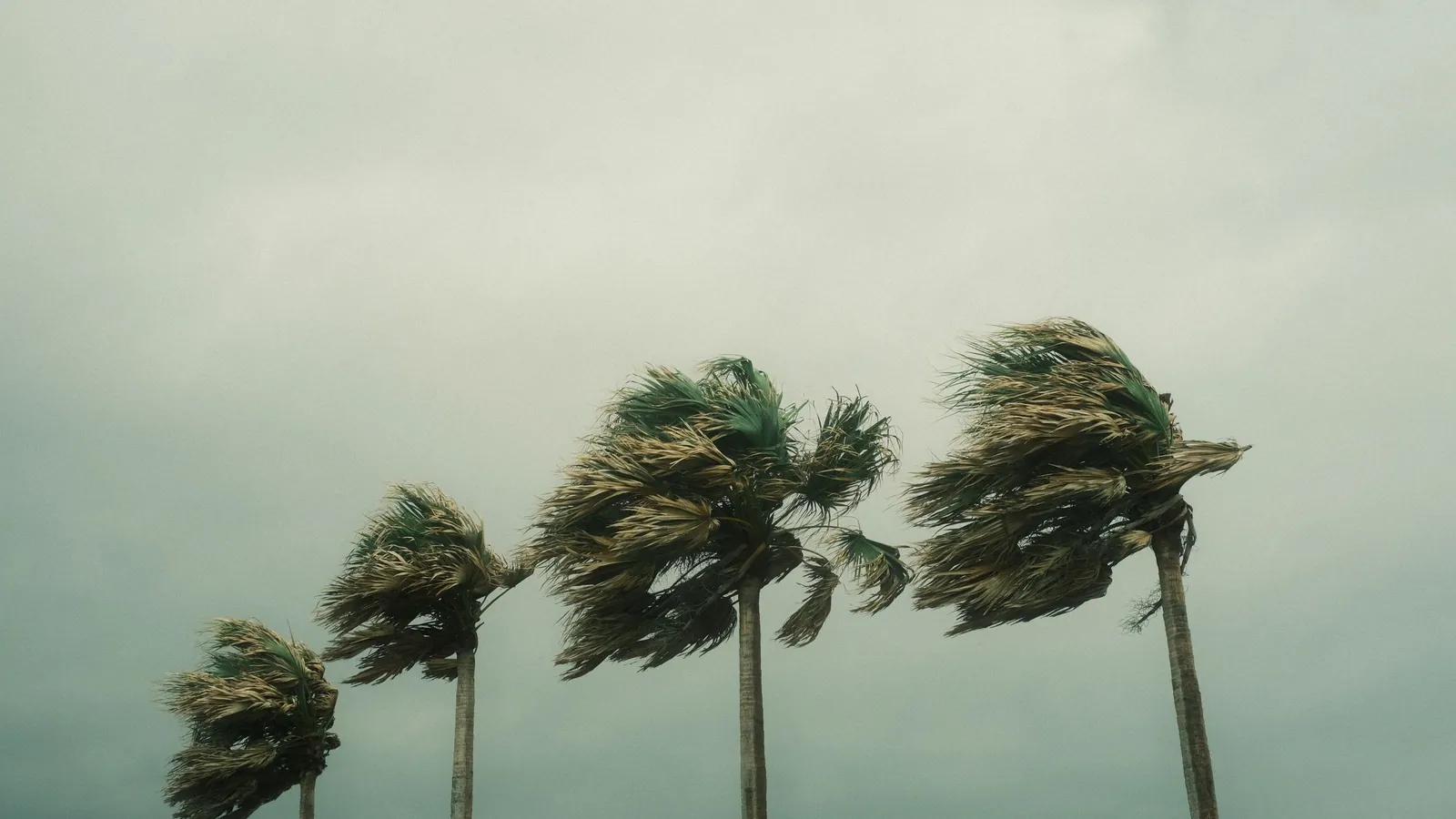
Know the season
The Atlantic hurricane season runs June 1 to November 30 and peaks around September 10, with most activity between mid-August and mid-October. Book pruning and removals in winter or spring, when crews have openings and nothing is blowing.
Two ways trees fail in wind
UGA Extension names the two most common kinds of wind damage: limb breakage and windthrow, where wind uproots or snaps the whole tree. Windthrow gets common when heavy rain comes before or with high winds, because saturated soil loses its grip on the roots.
Species that hold, and species that don't
A UGA Extension circular ranks live oak and longleaf pine among the species most resistant to storm damage, with water oak and slash pine ranking lower. Willow, silver maple, Bradford pear and edible pears grow weak, upright branches and often fail in windstorms. UGA advises against planting them near the house.
Before the season
- Look for trees with one main stem and wide branch angles, 45 degrees or more. Narrow, tight forks split.
- If more than 70 percent of a mature tree's crown sits on one side, UGA's circular suggests removing and replacing it.
- Have an arborist check big, old trees. Once decay fungi move in, UGA says nothing cures it, and the wood loses strength over time.
- Don't over-fertilize with nitrogen or overwater. A bigger crown on a smaller root system makes a tree more prone to storm damage.
- Thin heavy crowns and remove deadwood over the roof, the driveway and the power drop.
After the storm
- Stay away from any tree touching a power line and call 911 or your utility.
- A UGA rule of thumb: a hardwood that lost more than 50 percent of its branches, or a pine that lost more than 30 percent, will need removal.
- UGA Extension advises removing any pine left leaning after a storm.
- The Georgia Forestry Commission says to take down hazardous trees and limbs right away but wait six to 12 months, until winter if you can, before major pruning.
- Call your insurer if the tree damaged the house, a car or other property.
Free advice
The Georgia Forestry Commission runs a free Ask the Arborist service where arborists answer homeowner tree questions. It's a good first stop for a tree you're unsure about.
Sources
- National Hurricane Center, tropical cyclone climatology
- UGA Extension, wind damage to trees
- UGA Circular 806, storm damage resistance (copy hosted by Texas A&M AgriLife)
- UGA Extension Fannin-Gilmer, assessing storm-damaged trees
- Georgia Forestry Commission, trees and storm safety
- Georgia Forestry Commission, natural disaster recovery
- Chatham County bulletin on Hurricane Helene (Sept. 27, 2024)
- AP via Fox News, Savannah's tree canopy after Matthew (2016)